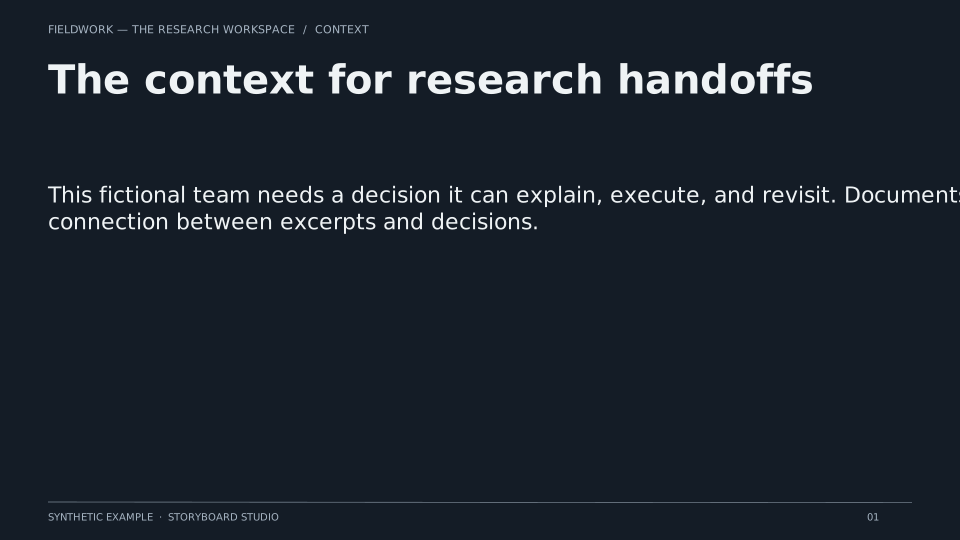
A captioned walkthrough of observed app screens, recorded CLI output and the editable deck opened in Keynote.
Native objects Edit text, tables and chartsLocal projects Keep the source beside the storyReviewable output Inspect JSON, diagnostics and receipt
FROM IDEAS TO AN ARGUMENT
A compiler for the story. A workspace for the author.
Keep your content, strengthen the progression, and inspect the gaps before you export.
01
Write the brief
Use Markdown or structured JSON. State the audience, objective, evidence, recommendation and next action.
# A focused product pilot
Audience: Product leadership
Owner: Product lead
Next action: Approve the pilot
## The handoff needs a clear owner
Keep the evidence beside the decision.
02
Inspect the story
Compile locally. Move slides, refine the copy and use Narrative Doctor to spot missing actions, repeated ideas and unsupported claims.
ContextProblemEvidenceOptionsRecommendationAction
03
Export real PowerPoint
Editable text, native shapes, tables, charts, embedded workbooks and images. Your story JSON and integrity receipt stay beside the deck.
Every deck below was generated by the Rust engine and independently rendered in LibreOffice. Download the editable files and inspect their sources.
20 examples
All scenarios, names and data are synthetic. Text checks do not certify every office viewer or factual accuracy.
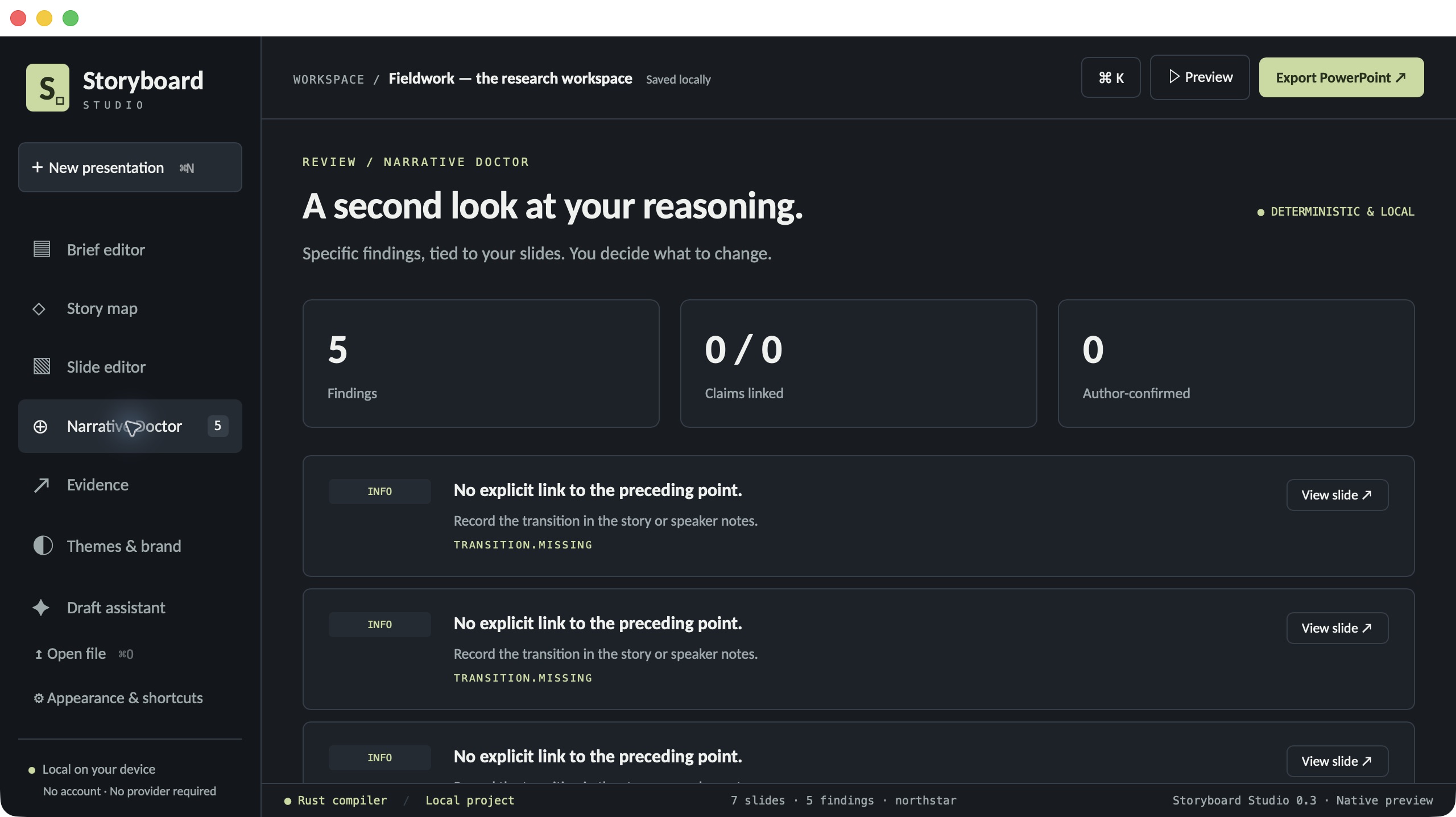
NARRATIVE DOCTOR
A second look at your reasoning.
Specific findings tied to the story: missing ownership, unclear next action, weak progression, copy repetition, dense slides and claims without supporting records.
You decide what to change. Evidence presence, author confirmation and factual truth remain distinct.
16 GiB, macOS 26.6, release build. Means of five runs; layout and package checks included, file I/O and office rendering excluded. Warm CLI startup 5.3ms; first observed launch 495.7ms; benchmark peak RSS 48.0 MiB. Raw measurements and method ↗
START WITH ONE BRIEF
Build your first deck.
Rust 1.95+. Native CLI, reusable libraries and a Tauri desktop workspace.
 Storyboard